
Pay Bill

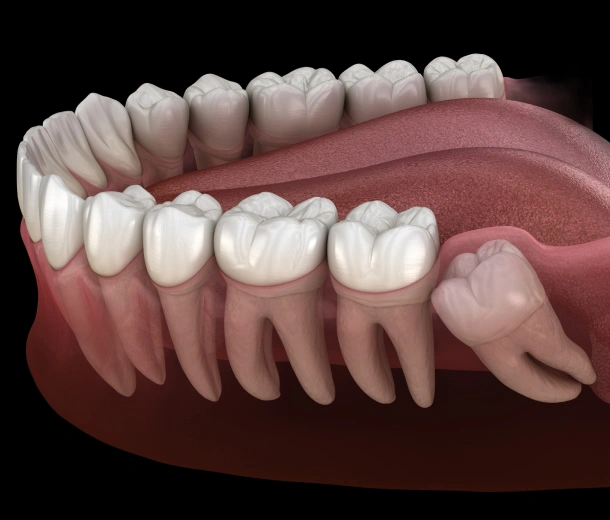
How Wisdom Teeth Impact Oral Health
Wisdom teeth are the upper and lower third molars at the very back of the mouth that are the last permanent teeth to emerge, usually between the “wizened” years of 17 and 21. They are useful teeth if they emerge without complication. Regretfully, wisdom teeth may suffer from serious complications for which you should get in touch with Highbridge Dental Associates. In diagnosing and gently treating your wisdom tooth conditions we will draw on our years of experience in successfully addressing the wisdom teeth symptoms of our family of patients.
Common Wisdom Teeth Complications
While wisdom teeth are valuable for chewing, they can cause significant issues when they don’t emerge correctly. Some of the most common wisdom tooth complications include:
- Wisdom tooth misalignment, a condition in which they fully emerge but are misaligned
- Wisdom tooth impaction, a condition in which they are submerged below the gum line in a vertical, horizontal, or angular position
- Wisdom tooth partial eruption, a condition in which they only partially emerge
Risks of Wisdom Teeth Complications
If left untreated, wisdom tooth complications can result in serious dental problems, including:
- Tooth decay: Wisdom teeth that are difficult to clean may develop cavities.
- Tooth infection: Impacted or partially erupted wisdom teeth can trap bacteria, leading to infections.
- Dental cysts: Fluid-filled sacs can form around impacted teeth, damaging surrounding structures.
- Damage to other teeth, gums, nerves, and jawbone: Misaligned or impacted wisdom teeth can put pressure on adjacent teeth, leading to long-term damage.
Seeking treatment for wisdom tooth complications early on can help prevent these serious health risks.
Symptoms of Wisdom Teeth Complications
Common signs that your wisdom teeth may be causing issues include:
- Pain or stiffness near an impacted wisdom tooth
- Ear pain, especially on the side of the affected tooth
- Discomfort or irritation from a wisdom tooth rubbing against the cheek, tongue, or the roof of the mouth
- Tooth decay or gum disease caused by hard-to-reach areas around the wisdom teeth
- Crowding of other teeth as wisdom teeth try to emerge
- Damage to adjacent teeth from pressure exerted by impacted wisdom teeth
If you experience any of these symptoms, it’s important to schedule an appointment at Highbridge Dental Associates as soon as possible for a thorough evaluation and appropriate treatment.
Effective Wisdom Tooth Treatment
At Highbridge Dental Associates, we begin by thoroughly evaluating your wisdom teeth through X-rays and other diagnostic tools to determine whether treatment is necessary. Depending on your diagnosis, we may recommend monitoring your wisdom teeth if they are emerging properly and not causing issues. If the wisdom teeth are misaligned, impacted, or causing pain, we may suggest extraction to prevent future complications such as infections or damage to neighboring teeth. In some cases, minimally invasive procedures, like partial removal or adjustment, may be performed to alleviate discomfort and avoid more serious problems in the future.
Frequently Asked Questions
Do all wisdom teeth need to be removed?
Not all wisdom teeth need to be removed. If they are healthy, properly aligned, and not causing any issues, we may simply monitor them. Extraction is usually recommended when there are complications such as misalignment or impaction.
How do I know if my wisdom teeth are causing problems?
Common signs include pain, swelling, difficulty opening your mouth, or discomfort around the back of the mouth. If you experience any of these symptoms, it’s important to see a dentist for an evaluation.
Is the wisdom tooth extraction procedure painful?
The procedure is typically performed under local anesthesia to ensure you are comfortable. Afterward, you may experience some swelling and discomfort, which can be managed with pain medications.
How long does it take to recover from wisdom tooth extraction?
Recovery time varies, but most patients heal within 3-7 days. We will provide detailed aftercare instructions to help speed up the healing process and minimize discomfort.
Can I eat after having my wisdom teeth removed?
It’s recommended to stick to soft foods for the first few days after extraction. Avoid chewing on the side where the extraction occurred to allow proper healing.
New Patients & Emergency Appointments Welcome